A platform for advancing research and action on
ultra-processed foods globally

Want to get involved? Register your interest.

Who We Are

About us

Hosted by Colansa, the Ultra-Processed Food Research Action Network (UPF·RAN) is a global network of researchers committed to advancing knowledge and action on ultra-processed foods.

Our platform is an open repository dedicated to sharing documents, articles, and resources on the harmful impact of ultra-processed foods on human and planetary health, grounded in scientific evidence. It brings together materials from diverse sources and disciplines, including nutritional epidemiology, public health, public policy, and social sciences, among others.

The purpose of the platform is to coordinate research and translate evidence for policymakers, advocates, journalists and educators.

PUBLICATIONS

The Lancet Series on
Ultra-Processed Foods
and Human Health

A call for urgent, coordinated public policies, and collective actions to address ultra-processed foods growing impacts

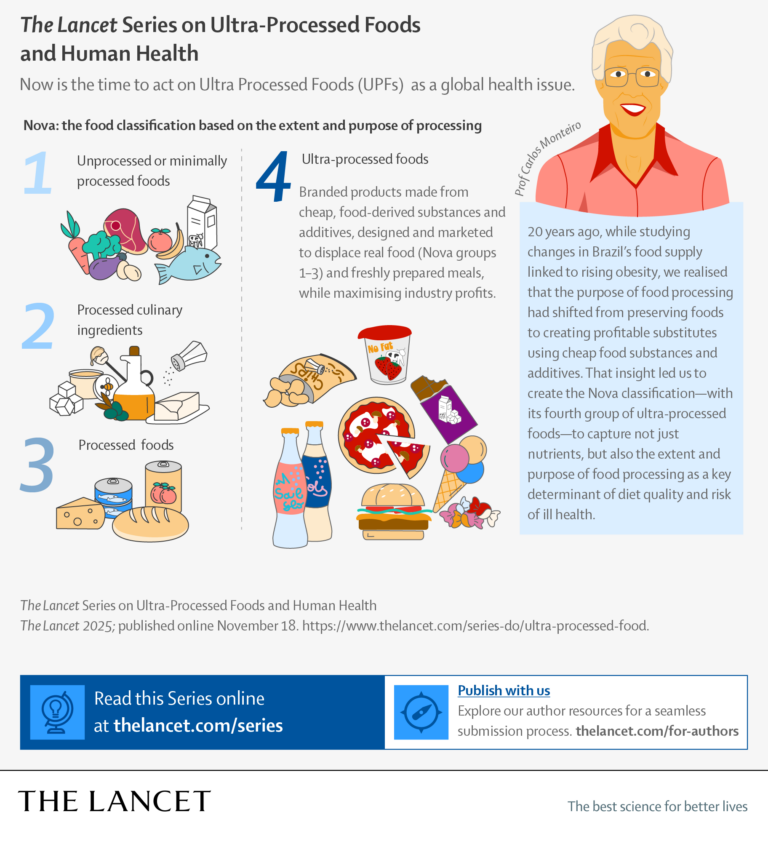
Ultra-processed foods (UPFs), as defined by the Nova food classification system, are novel branded products made from cheap food-derived substances and additives, designed and marketed to displace real food and freshly prepared meals, while maximising industry profits.

Since the term UPFs was coined by Prof Carlos Monteiro and team at the University of São Paulo in 2009, hundreds of studies have documented global increases in UPF consumption, and its association with multiple harmful effects on diet quality and human health.

Authored by 43 global experts including Prof Monteiro, the 3-paper Lancet Series on Ultra-Processed Foods and Human Health argues the rise of UPFs in human diets constitutes a major new challenge for global public health.

Read the three articles of the series on The Lancet Series on Ultra-Processed Foods and Human Health webpage.

The Series key messages

1.

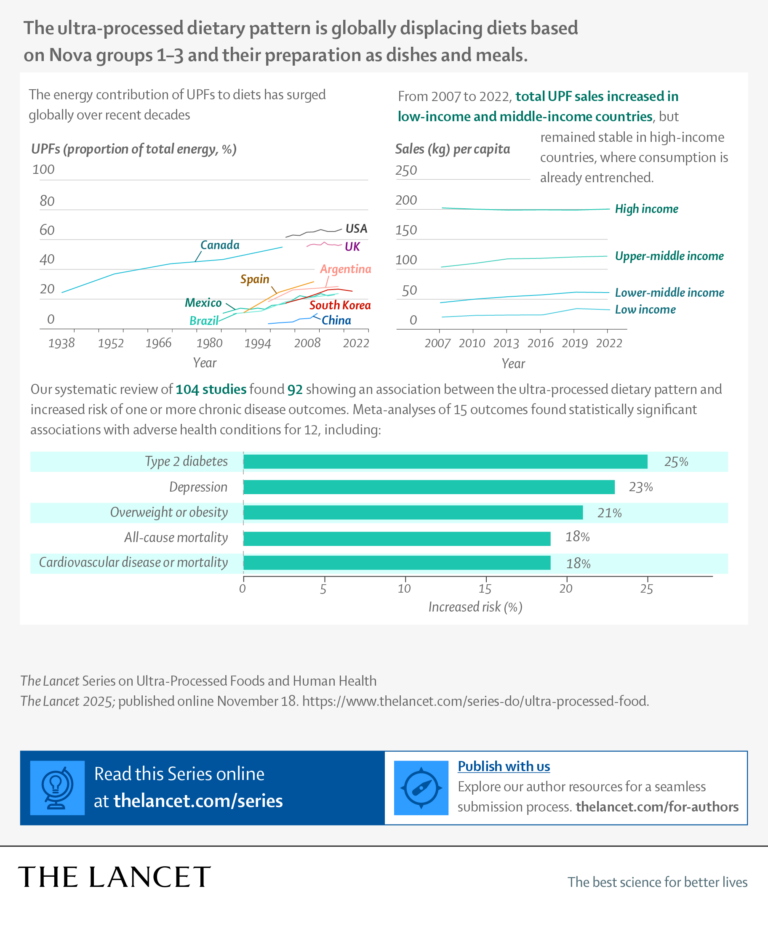
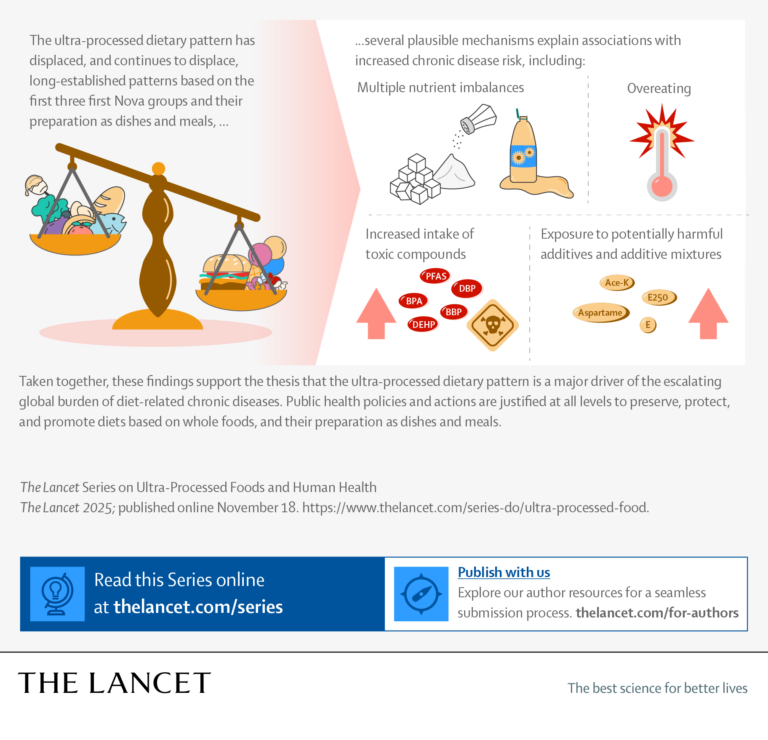
Evidence shows UPFs are displacing long-established dietary patterns, worsening diet quality, and are associated with an increased risk of multiple chronic diseases.

2.

Improving diets cannot rely on consumer behaviour change alone – it also requires coordinated policies across food systems that legislate reductions in UPF production, marketing, and consumption.

3.

Only a coordinated global response can combat UPF companies’ political playbook – the largest barrier to implementing effective policies to reduce UPF consumption.

Watch the full events of The Lancet Series on
Ultra-Processed Foods and Human Health

London
Global Launch Event

Brasilia
Brazil Launch Event

Colansa
LatAm Launch Event

Sydney
Australia Launch Event

See the Series infographic

Media

In the press

Spotlighting our recent press coverage around the world

The Guardian - UK - November 2025

Ultra-processed food linked to harm in every major human organ, study finds

World’s largest scientific review warns consumption of UPFs poses seismic threat to global health and wellbeing

The New York Times - USA - November 2025

Scientists Call for Global Shift Away From Ultraprocessed Foods

In a sweeping series of papers, scientists have proposed policy reforms, such as taxes on sugary drinks, to improve the food supply

O Globo - Brazil - November 2025

Researchers call for urgent action against the rise of ultra-processed foods in a new series in The Lancet

Studies conducted by 43 international scientists reveal the health risks of these products, the tactics used by the industry, and the need for public policies to curb increased consumption

Contact

Register your interest

For media inquiries, reach murilo.bomfim@upfran.org